
Supermarket savings: the downshift test, loyalty prices and yellow stickers
Six habits that cut a weekly shop without changing what you eat, from own-brand swaps to unit pricing

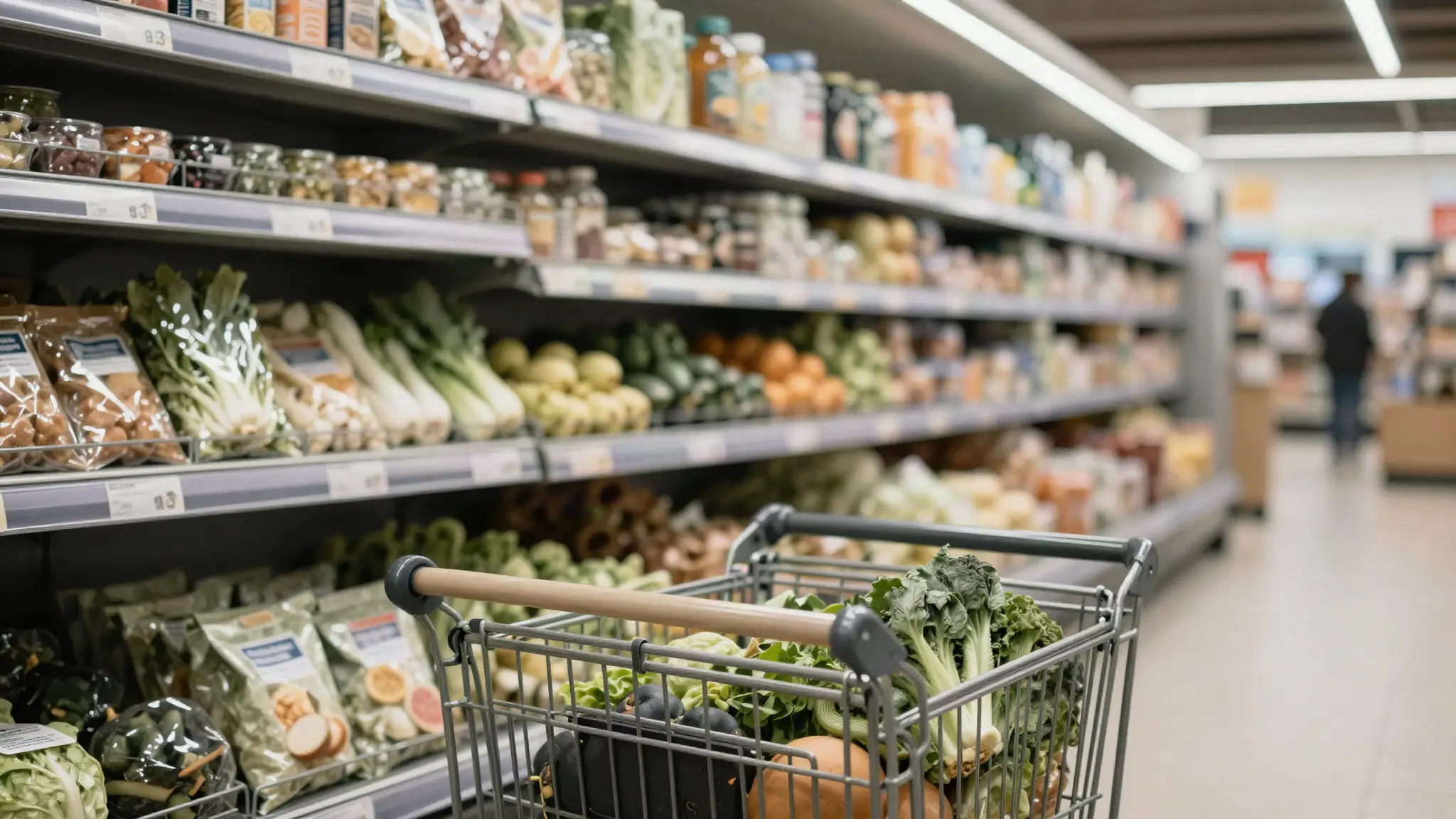
Food inflation is still running ahead of wages for many households, and the August 2026 CPI figure of 3.1% shows prices are not settling. This guide covers the six changes that make the biggest difference to a weekly shop. None of them need coupons, extreme couponing or a spreadsheet.
Downshift one brand tier
Most supermarkets sell four tiers of the same product: premium own-label, branded, standard own-label and value own-label. The saving from dropping one tier is often 20% to 40% on that item, and the recipe is frequently made in the same factory.
Do it as a test, not a gamble. Pick ten items you buy every week. Swap each one down a single tier. Eat them for a fortnight. Keep the swaps nobody noticed and go back up on the ones that mattered. Most households find that tinned goods, dried pasta, rice, flour, cleaning products and painkillers pass without comment. Tea, coffee and crisps are the usual failures.
Repeat the test once a quarter. Ranges change, and a value line that was poor last year may have been reformulated.
Loyalty pricing is now the real shelf price
Loyalty schemes have shifted from points to two-tier pricing. The ticket price is what you pay without a card, and the loyalty price is what the store expects most people to pay. If you shop without a card you are paying a premium on hundreds of lines.
- Sign up to every scheme at any store you use, even occasionally.
- Use the app, not just the card, so you see personalised offers before you shop.
- Do not buy something because it is on loyalty offer. Buy it because it was already on the list.
Points schemes still exist alongside. Check whether points are worth more when spent with partner retailers than at the till.
Compare unit price, not pack price
Every price label shows a unit price in small print, usually per 100g, per kg or per litre. That is the only number worth comparing. Bigger packs are not always cheaper per unit, and multibuys sometimes cost more per unit than the single item next to them.
| What you see | What to compare |
|---|---|
| 2 for £3 | Per 100g against the single-pack unit price |
| Family pack | Per kg against two standard packs |
| Special offer sticker | Unit price against the own-brand alternative |
| Loose versus pre-packed | Per kg, and loose lets you buy the amount you need |
Some stores now show unit prices inconsistently across pack sizes. If one label says per 100g and another says per kg, do the arithmetic on your phone.
Yellow stickers and food waste apps
Reductions happen in waves during the day, with the deepest cuts an hour or two before closing. Ask a member of staff when the final markdown happens at your branch; it varies by store and by department. Bread, meat and fish freeze well and are the best targets. Salad and berries usually are not.
Apps that sell surplus food from cafes, bakeries and supermarkets at a steep discount work on the same principle. You collect a bag of unsold food at a set time and do not choose the contents. They suit people with flexible evenings and a freezer.
Plan meals from the cupboard outwards
Meal planning saves money in two ways: fewer top-up shops, and less waste. The average household throws away food it paid for every week.
- Before writing a list, check the fridge, freezer and cupboards.
- Plan five dinners, not seven. Leftovers and a free-for-all night cover the rest.
- Write the list in store order so you are not wandering.
- Shop once. Every extra visit adds unplanned items.
- Freeze half of any batch cook on the day you make it.
Watch out for
- Shrinkflation. The pack got smaller and the price stayed the same. Unit price catches this.
- Loyalty schemes that need a minimum spend or a subscription to unlock the lower price. Work out whether you would hit the threshold anyway.
- Shopping hungry, or with children, or after 8pm. All three raise the bill.
- Discounters are not always cheaper for everything. Compare your ten most bought items across two stores rather than assuming.
Small, boring changes stack up. A 10% cut on a £100 weekly shop is £520 a year without eating anything different.